Has video game exploration changed over the years? I’d argue, yes. Not for better or worse – just changed.
Before I proceed, let’s set some boundaries…
What constitutes exploration in video games?
To get started, let’s look at the literal definition of the word “exploration.” Cambridge Dictionary provides several helpful ones:
- The activity of travelling to and around a place, especially one where you have never been or few people have been before, in order to find out more about it.
- The activity of searching in a place in order to find a particular thing, usually something valuable.
What does this mean in the context of video games? Basically, the same thing – except that you’d often be looking for either loot, door keys or other helpful trinkets for gameplay purposes. For story purposes, however, you might be looking for a way in or out of a dungeon, a damsel in distress, a magical artefact or some other McGuffin. What’s important is that you don’t know where the object or person in question is located. At all. You have to scour the place to find them.
So, let’s land on the definition for video games now:
Exploration is the activity of travelling around a non-linear location (e.g., level or open area), one that doesn’t have objective markers or even a map, in order to find loot, door keys or other helpful trinkets for gameplay purposes, as well as achieve story-related goals such as finding a special item/NPC or a way in or out of a location (e.g., dungeon exit).
Based on this definition, let’s ask ourselves this:
What would preclude a game from having “proper” exploration?
It’s all mostly in the definition:
Linear level/area design:
If there’s only one way to go – forward – then there’s no exploration. Just moving in one direction. A good example of this is Final Fantasy XIII (excluding the Grand Pulse area, of course). The entire time you’re moving through one linear corridor, occasionally stumbling across a few forks that either flow back into the main path or are just short diversions that lead to occasionally useful loot. You might be tempted to call this exploration, but as we explore proper exploration further in this article, I hope to convince you otherwise.
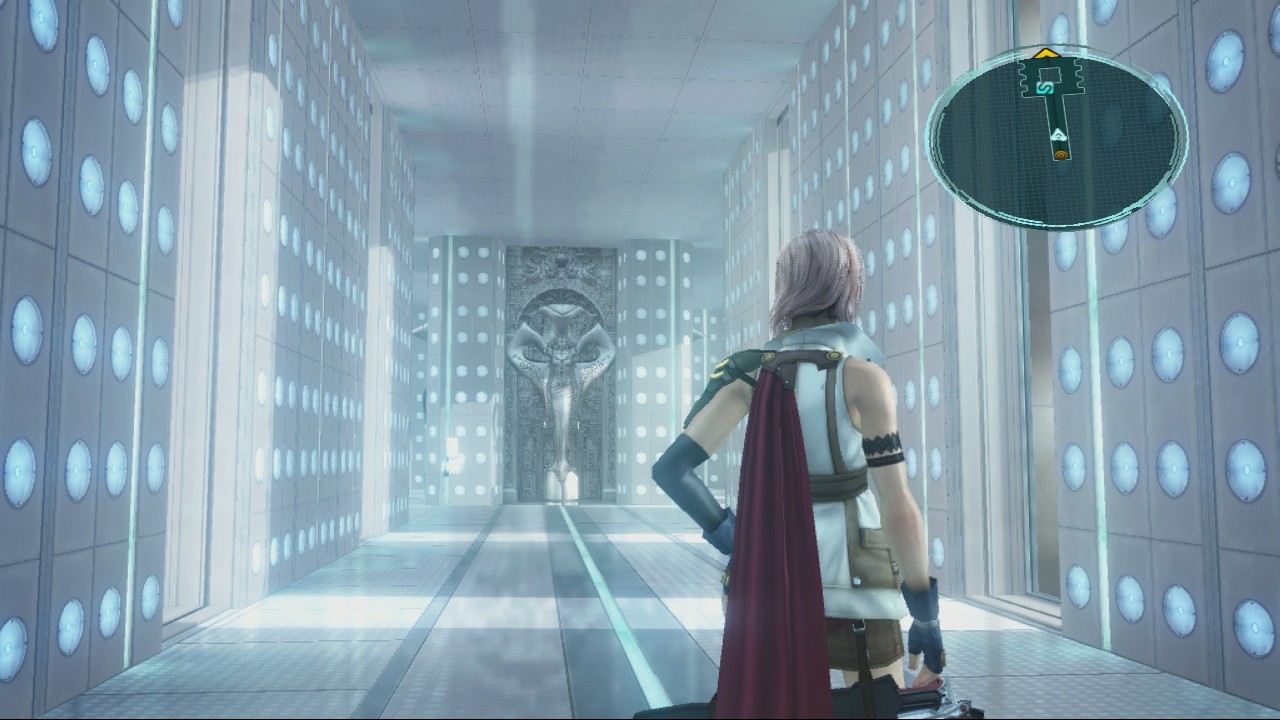
The linear level design of Final Fantasy XIII.
Objective markers:
This is the most often-sighted killer of in-game exploration. That’s because most of quest markers suck. Or rather, most are too good at their job. They show you exactly where to go, allowing you to chase that marker until you reach your goal. The earliest and most egregious example of this are the objective markers in The Elder Scrolls IV: Oblivion (2006), where you have this huge world yet no incentive to explore, as everything is spoon-fed to you – at least, as far as story/quest objectives go; you can search for loot on your own, if you like. While I’m on it, I’d classify “yellow paint” and similar guidance tools as objective markers also, since they essentially do the same thing – show you where to go.
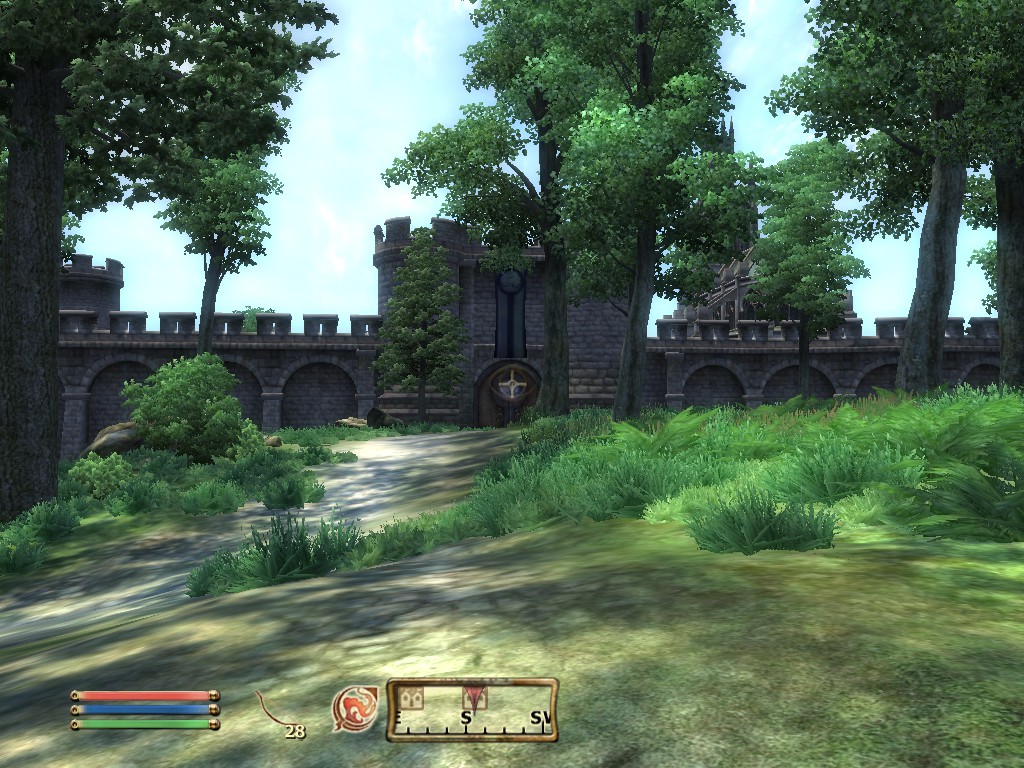
Quest markers in The Elder Scrolls IV: Oblivion.
Detailed map:
A map that shows you everything, such as dungeon layout or even what you’d find in individual rooms can be as bad as an objective marker. Most games don’t actually go this far, but combined with objective markers and/or non-linear location, even a map that opens up slowly as you explore it can give away too much. Final Fantasy XIII and The Elder Scrolls IV: Oblivion are both guilty of this.
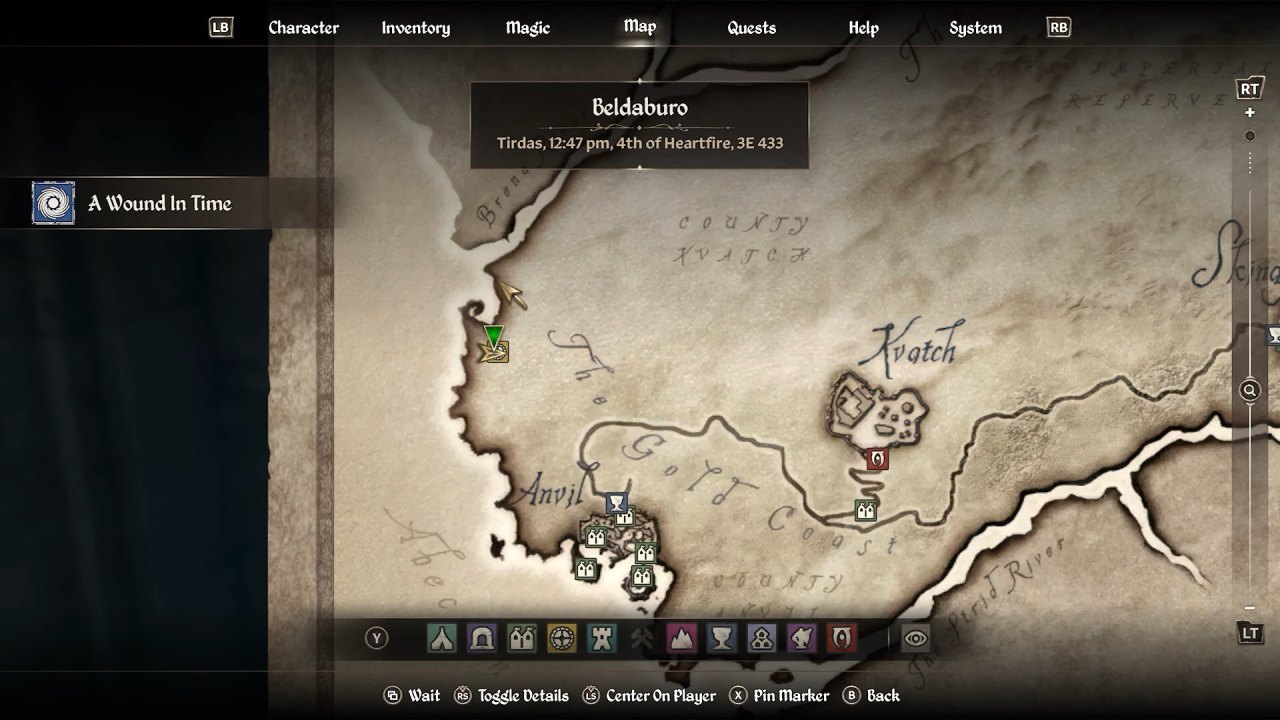
Map with a marker in The Elder Scrolls IV: Oblivion.
Nothing to find:
You can have a labyrinthian level with no map or objective markers, but if there’s nothing to find in it, you once again leave no reason to explore. If all your level has is the end goal (e.g., finding that dungeon exit), but nothing else to find in between, other than enemies or cheap/useless loot, then your whole elaborate level is a waste of time. Many older games fall into this category for me, including Wolfenstein 3D or even the early Elder Scrolls games, such as Arena or Daggerfall. Those games are not empty, mind you, but for the amount of time spent wandering through them, you find surprisingly little useful in them.
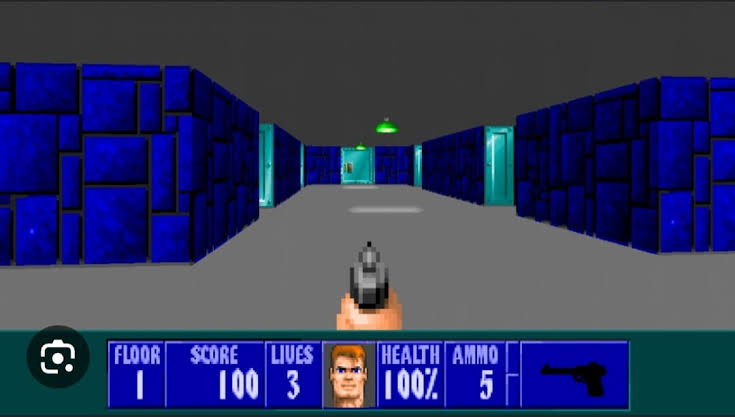
The emptiness of Wolfenstein 3D.
Ugly or repetitive aesthetics:
This one is subjective… But I think it’s a useful thing to add. If your world is one grey dungeon where every corridor and room is the same shade of grey, you might bore certain people very quickly. Stumbling on a beautiful sight can be as rewarding as finding a powerful weapon or huge stash of ammo. Why is this not part of “nothing to find”? Well, because this is not strictly speaking an object. It wouldn’t be part of a quest or provide any sort of gameplay perk. It’s there just to please your eye. Final Fantasy XIII is a game that again springs to mind. It often has “nothing (useful) to find” from loot or gameplay perspective yet you’d regularly stumble upon beautiful sights or vistas. On the opposite end of this is again something like Wolfenstein 3D, where you’d be walking through the same rooms and corridors for hours on end.
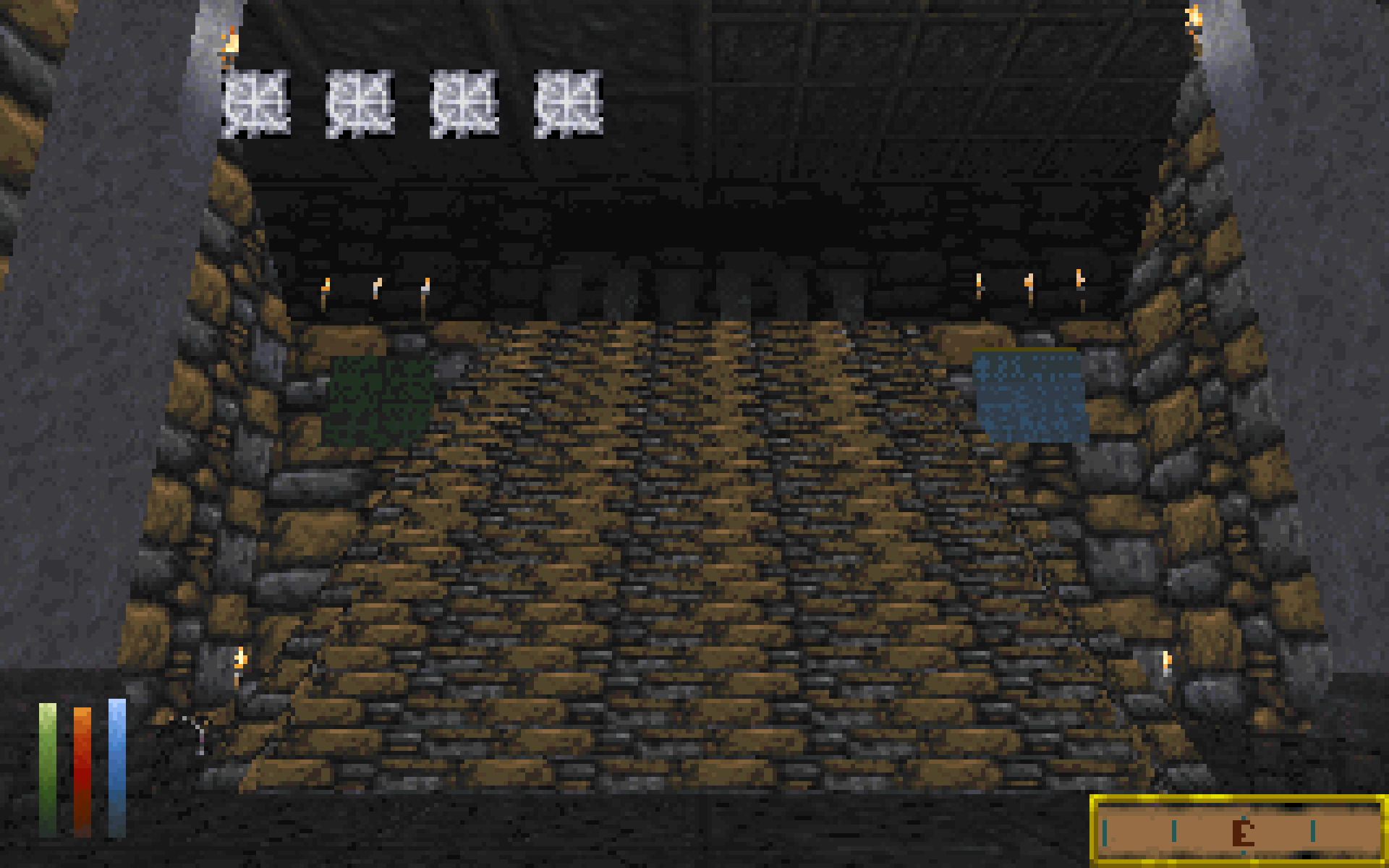
The grey-brown dungeons of The Elder Scrolls 2: Daggerfall.
Modern vs. old: What’s changed?
Plenty has! I’d like to separate exploration in games into three distinct eras:
- Early 00s and before
- Mid 00s to early 10s
- Mid 10s and after (as of 2026)s
These era encompass two distinct schools of thought regarding exploration (that are not mutually exclusive but have often been pitted against each other in the gaming community):
Complex, large levels or areas with no guidance of any kind:
Most pre-00s fall into this category, as do some games from early 00s. Games like early Ultima and Might and Magic (from the 80s) had huge and complex (read: labyrinthian) areas with no objective markets or maps (other than the cloth map you’d get in a physical box – you had to chart dungeon and city layouts yourself, it’s crazy!). There was quite a bit (read: a lot) of streamlining that occurred in the 90s though (think the original Fallout or even later Might and Magic games), which involved shrinking and simplifying some of the areas, plus including in-game maps.
However, the core exploration principles didn’t change until after the 00s, I’d argue. I’d also add that having this type of exploration wasn’t an RPG thing either. You could find it in pretty much any game with a world through which you could move freely.
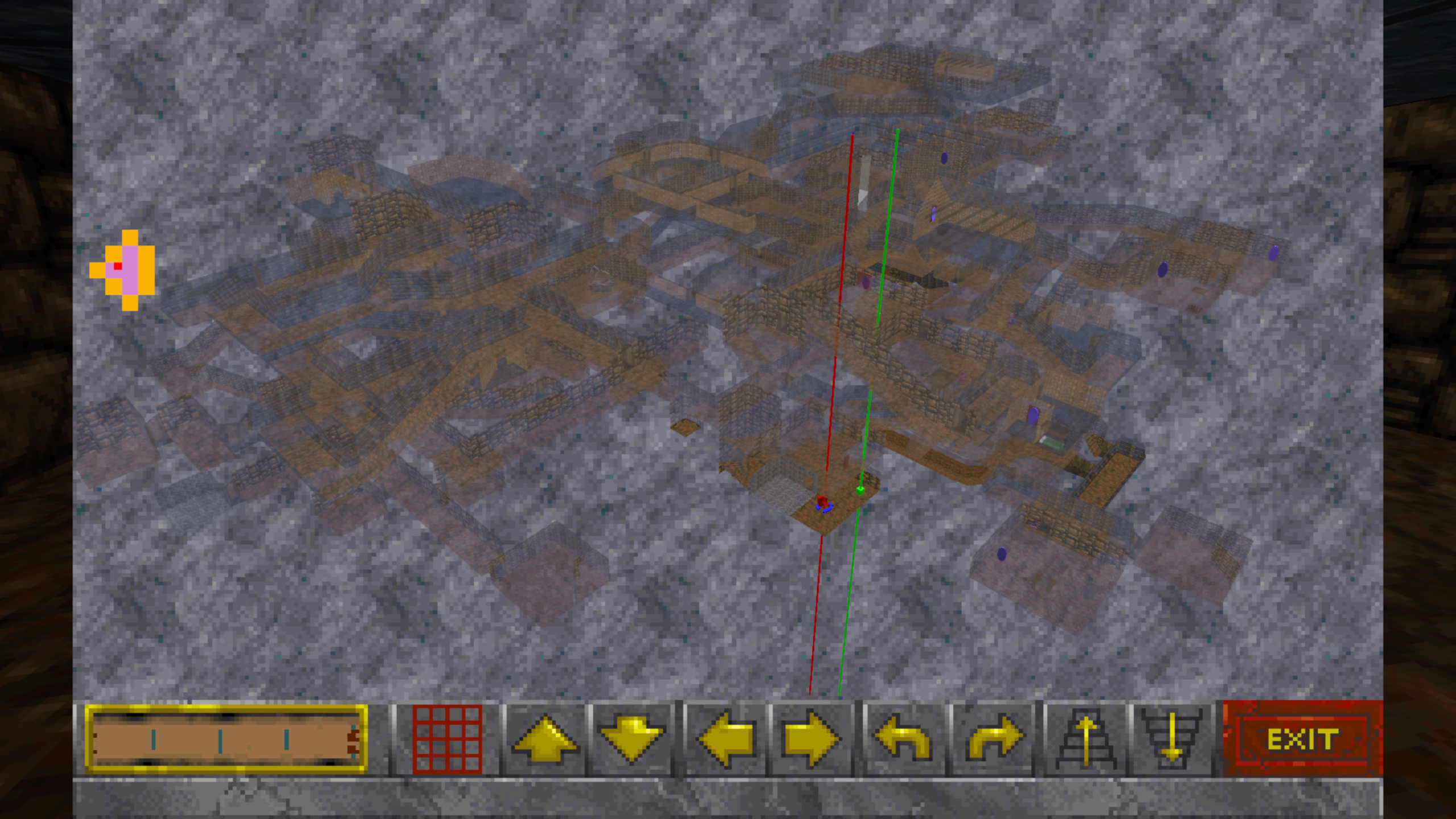
(Overly) complex dungeons of The Elder Scrolls II: Daggerfall.
Simplified, smaller levels or areas with tons of guidance:
In the mid-00s, you got games that had smaller, morel linear levels or areas with map markers and detailed maps. Examples of this are the aforementioned The Elder Scrolls IV: Oblivion (and its follow-ups) and games across a variety of genres – from first-person shooters to action adventures to survival horror; think original Doom (1993) vs. Doom 3 (2004) or original Tomb Raider (1996) vs. Tomb Raider: Legend (2006) or original Resident Evil (1996) vs. Resident Evil 4 (2005). All of the later releases in these franchises had reduced level complexity and more guidance compared to their predecessors from the 90s.
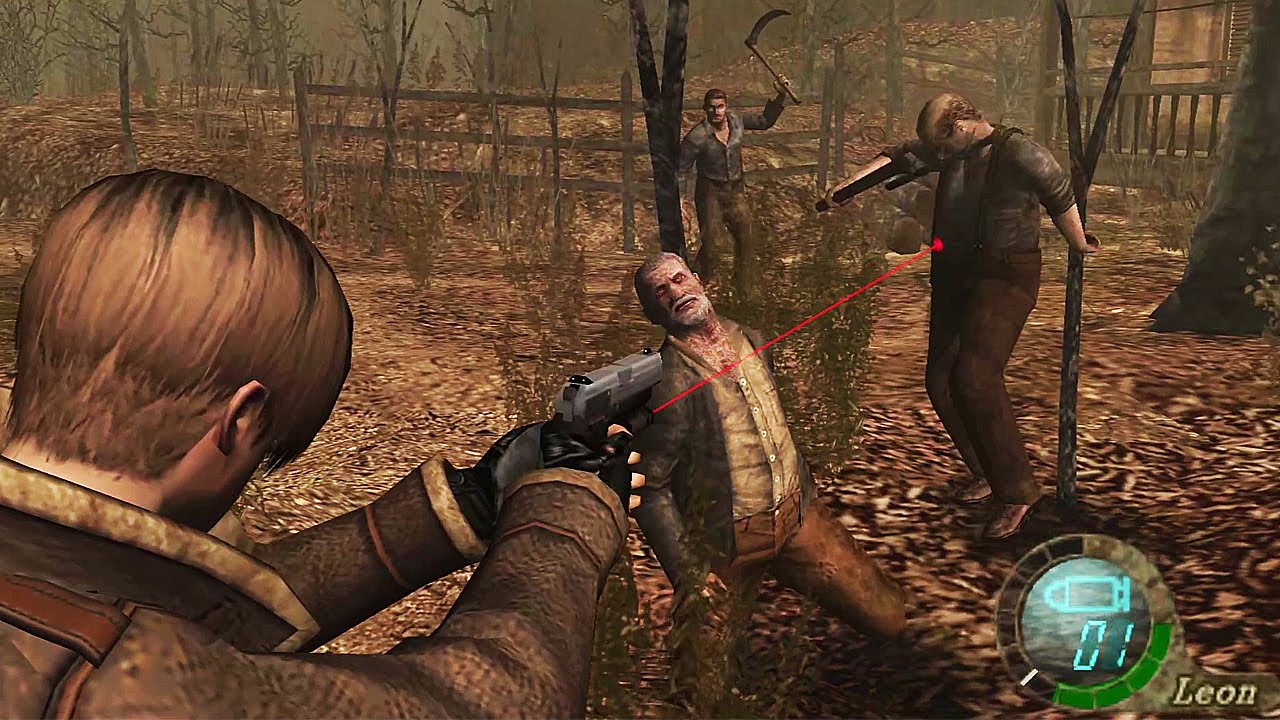
The (brilliant) simplicity of Resident Evil 4.
To summarize (and, more appropriately, simplify):
- Pre-00s exploration: Complex and unguided.
- Post-00s exploration: Simplified and guided.
But hang on, what about mid-10s and onward?
I want to posit that things did in fact change in the 10s – mainly due to more powerful technology. Areas and levels became bigger and more complex (from both graphical and design perspective), making guidance more necessary than in the 00s.
Triple-A games have this formula down to a science these days. Examples include:
- Horizon games
- The Outer Worlds games
- Bethesda games (Fallout 4 and Starfield)
- Marvel’s Spider-Man games
- Tomb Raider games
- God of War games
- Doom (2016) and onwards
- BioWare games (Dragon Age Inquisition & The Veilguard, Mass Effect Andromeda)
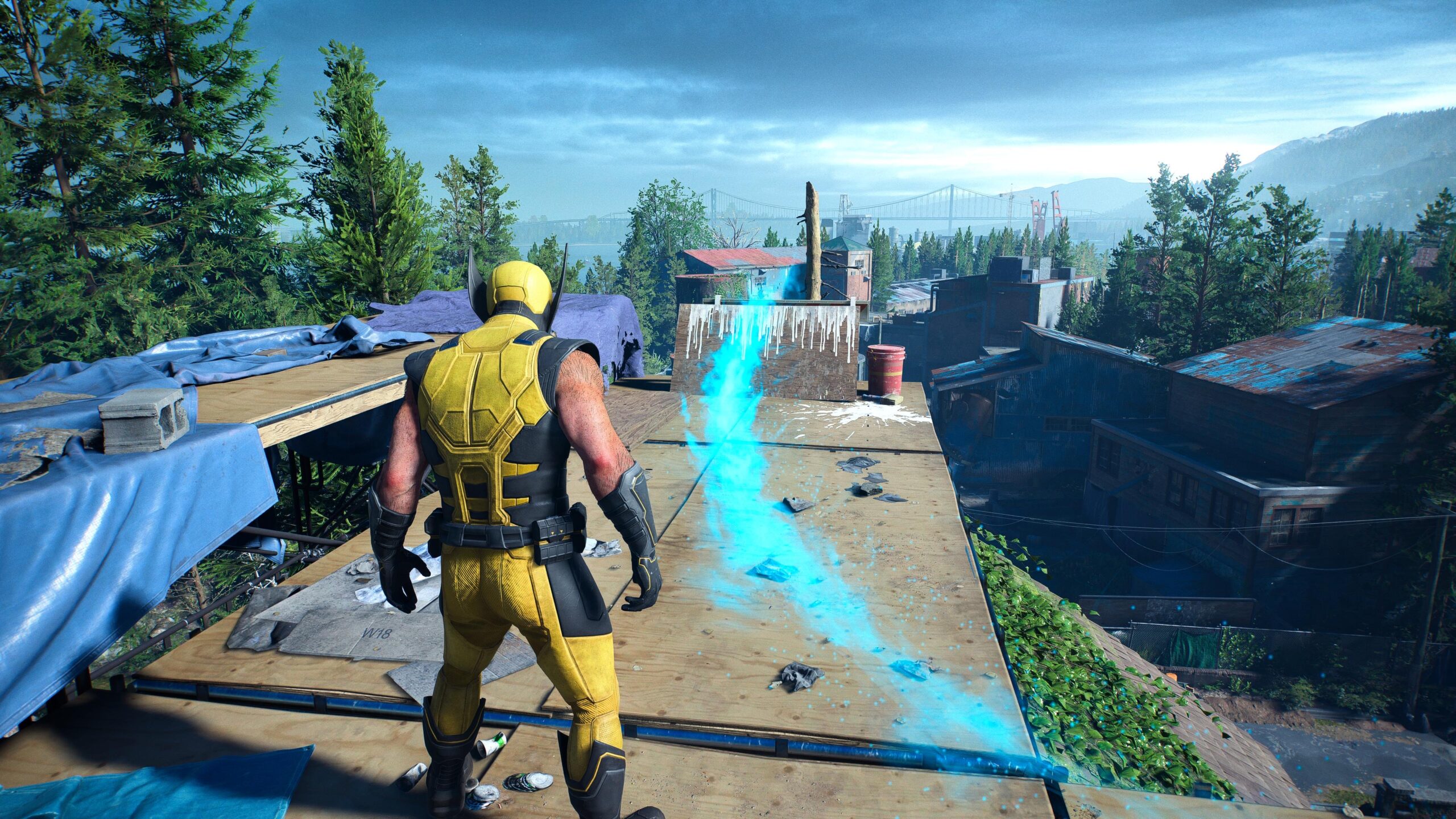
- Marvel’s The Wolverine
- Final Fantasy XV & XVI
- Assassin’s Creed games
Many of the games above are huge open-world experiences, meaning that theoretically you could get lost in their worlds as you explore them. Right?
Wrong!
Though big and complex, these words are not very exploratory. Map, quest markers, yellow paint and other widgets and arrows point you to where need to go exactly, ensuring you’re never lost. Never left “exploring.” Instead, you basically head in one direction, the way you would in a linear game like Final Fantasy XIII.
Despite triple-A games over-relying on this game design philosophy throughout the 10s and 20s, things have changed for the better too.
For one, From Software’s games became very popular. Demon’s Souls, Dark Souls and onwards all feature complex, almost labyrinthian areas, while providing no maps or map markers (or even quest logs!). Their popularity has led to the birth of a whole new genre – the so-called “soulslike” – many of which try to adhere to From Software’s ruthless design philosophy. However, the biggest sin of many soulslikes, I’d argue, is the lack of complexity in level design, which still leaves them wanting in the exploration department (an issue that isn’t present in From Software’s games, by the way).
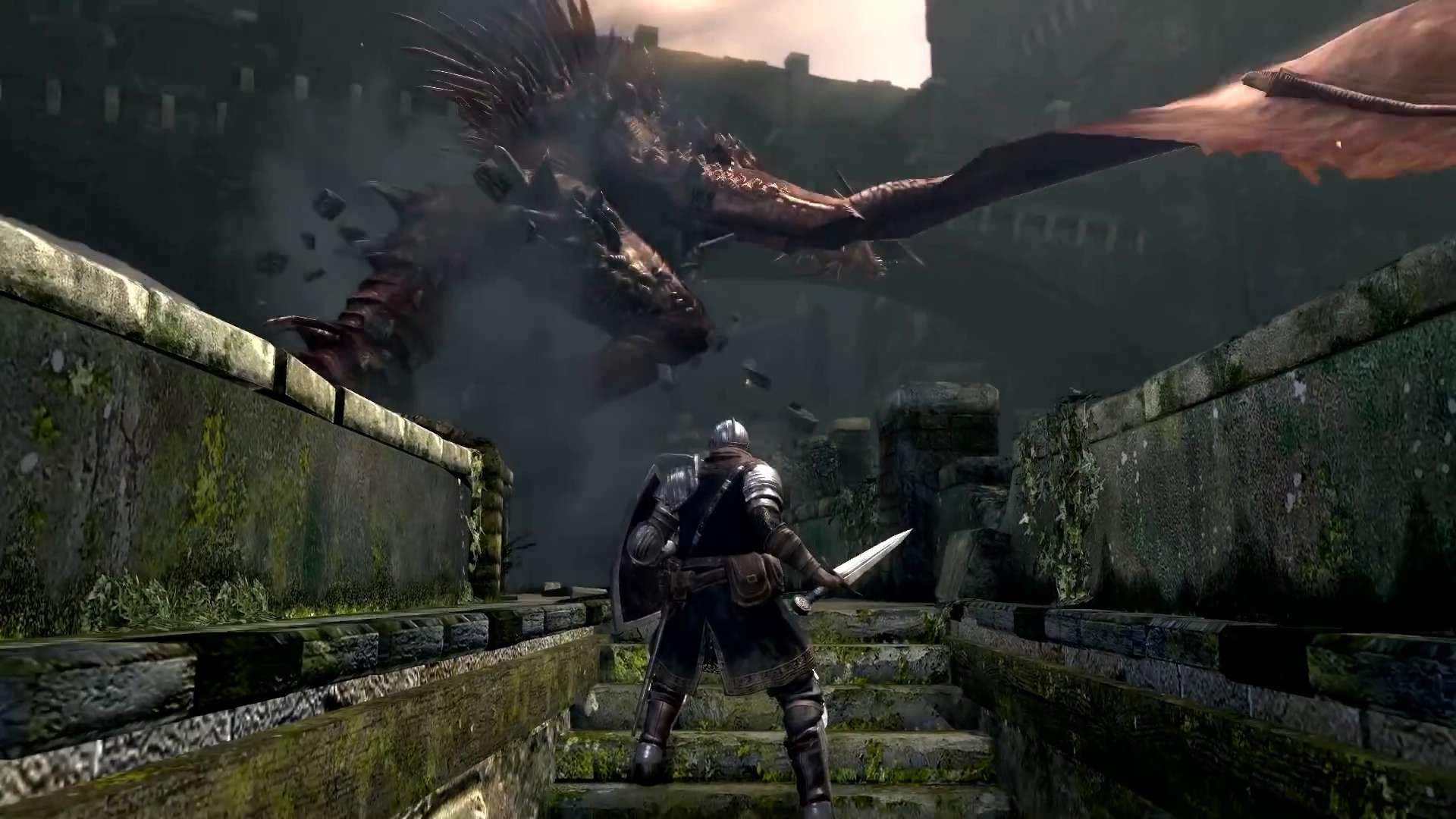
Exploration in Dark Souls.
Even so, the rise of the soulslike genre has motivated developers for other genres to dip their toes into similar territory, though instead of focusing on intense difficulty, they are more focused on exploration.
The most popular examples are Resident Evil VII and its follow-ups, all of which have brought back the exploration of the 90s Resident Evil games, given that the franchise has been mostly linear since Resident Evil 4. Zelda: Breath of the Wild is another one. On this one, you have a big world to explore with no objective markers or overly detailed map. It’s non-linear in the best way possible. More recently, we had games like Hell is Us and, to some degree, The Alters. Many indie or double-As in particular are keen on bringing back some of the exploratory elements from the older games.
Sounds like exploration sucks in modern games… Are we screwed?
If you think that, then you haven’t been paying attention. We’re seeing more and more games veer away from the mid-00s school of design. Yes, some games still “hold your hand” like Sony’ big blockbuster games, including the recent Wolverine game, but many choose not to, like the latest Resident Evil’s.
I’d posit that the “handholding” we saw in the 00s was a drastic overcorrection, which is something we’re starting to move away from (unless you’re that stupid Wolverine game). Recent Control Resonant, for example, lets you explore without much guidance. Same goes for The Blood of Dawnwalker.
Does this mean we’re going to see more “exploratory” games in the future?
I wish! As in, yes, I hope so. We’ll probably never return to the 90s school of design – and to be fair, a lot of it wasn’t great – but I do wish more games of various genres offered more exploration. More importantly, I’d like more purposeful exploration, where each nook and cranny is handcrafted and has something to find. Big maps can be fun, but if they are largely empty, then as far as I’m concerned, they’re just a waste of time.
90s games weren’t all big, but most were full of exploration. Heck, a small room can be mysterious if you’re not sure what exactly in it you’re looking for (could be a hidden switch!). They did a lot with little back then, and it really worked.
I want devs to scale back and expand at the same time.
Give me smaller, more purposeful worlds that are complex and lack guidance, if you’re an open-world game. If you’re a linear shooter, like Call of Duty, do the opposite – give me an area to explore and scale back (slightly!) on the shooting part.
My biggest pet-peeve these days are the Doom games. I love them, but not as much as some people. The common sentiment online is that key hunting from the older Doom’s prevents you from shooting things as often as you’d like. This is true, but for me, exploration and atmosphere were as important in those games as was shooting. In fact, my understanding is that the exploratory, atmospheric bits of the early Doom’s were the inspiration for Half-Life, and that game is awesome. In fact, if new Doom’s could go back to borrowing a little more from Half-Life again, like Doom 3 did but more aggressively, that would be great.
Anyway, before this devolves into a bunch of rambling, I like the return of true exploration in games like Control Resonant, Hell is Us and souslikes, but I’d love to see more of it in other games – and not just as an on/off toggle either (looking at you, Assassin’s Creed).
That is all. Thanks, game devs!
P.S. I don’t believe Final Fantasy XIII is a bad game, honest.